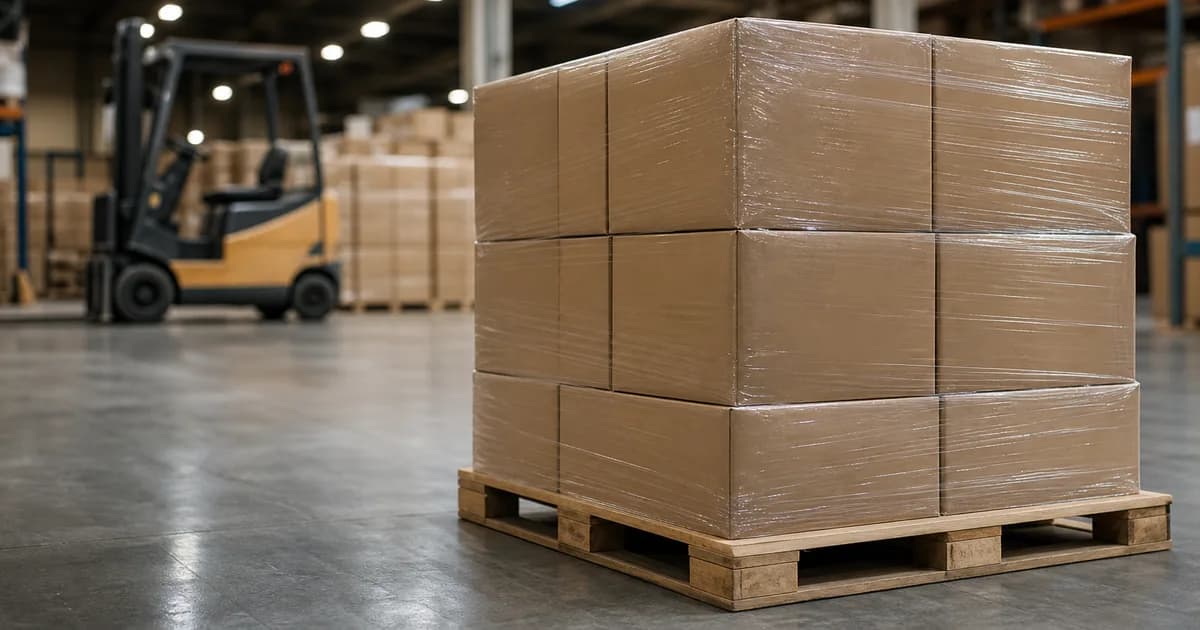
MOQ stands for minimum order quantity. It's the smallest number of units a manufacturer will produce in a single run. And for new supplement brands, it's often the first wall they hit.
Industry-standard MOQs for electrolyte and supplement manufacturing range from 5,000 to 25,000 units. For a brand that hasn't sold a single unit yet, committing to 10,000 stick packs of an unproven flavour is a terrifying (and often bad) financial decision.
Key facts
- MOQ (minimum order quantity) is the smallest number of units a manufacturer will produce in one run
- Industry-standard supplement MOQs: 5,000–25,000 units
- Evo Hydration's minimum: 1,000 units across white label, private label, and custom formulation
- A 1,000-unit white-label run costs roughly $4,000–$10,000 total
- Per-unit cost drops as run size grows, so reorders get cheaper once demand is proven
Why manufacturers set minimums
It's not arbitrary. Manufacturing has fixed setup costs that don't change whether you're producing 1,000 units or 50,000. The blending equipment needs to be cleaned, calibrated, and loaded. Packaging lines need to be configured for your specific format and label. Quality control testing happens per batch, not per unit.
For a large manufacturer running million-unit batches, setting up a 1,000-unit run is operationally painful. It ties up equipment for a fraction of the revenue. That's why most co-packers set high minimums. It's not that they can't do smaller runs. It's that it's not worth their time.
The problem with high MOQs for new brands
A 10,000-unit MOQ at $2.50 per unit means $25,000 committed before you've sold anything. If your first flavour doesn't resonate (and statistically, your first guess at the market is often wrong), you're sitting on thousands of units you can't move.
We've talked to founders who ordered 10,000 units of a product, sold 800, and had to throw the rest away when it expired. That's not a manufacturing failure. It's a mismatch between MOQ requirements and the reality of early-stage brand building.
Our approach: start small, scale up
Our white-label, private-label, and custom formulation services all start at 1,000 units. These are real production runs with the same quality standards as a 50,000-unit order. The per-unit cost is higher on smaller runs (you're spreading those fixed setup costs across fewer units), but the total investment is dramatically lower.
A 1,000-unit white-label order might cost $4,000–$10,000 total. That's market research you can actually sell. If it works, you order more. If it doesn't, you learned something for under $10,000 instead of $25,000.
Per-unit cost vs total cost
This is where new brands get tripped up. A manufacturer offers $1.50 per unit on a 10,000-unit run, and another offers $3.00 per unit on a 1,000-unit run. The first looks like a better deal. But look at total cost:
| MOQ | Per-unit cost | Total investment |
|---|---|---|
| 10,000 units | $1.50 | $15,000 |
| 1,000 units | $3.00 | $3,000 |
If you sell through 1,000 units at $5.00 each, you've made $5,000 in revenue and proven demand. Now you can confidently order 2,000 or 5,000 units at a better per-unit rate. If the product flops, you lost $3,000 instead of $15,000.
Lower per-unit cost only matters if you can actually sell the units. For unproven products, total risk matters more than unit economics.
When higher MOQs make sense
Once you've proven demand, larger orders absolutely make financial sense. The per-unit savings on a 5,000+ unit run are significant. If you're consistently selling through inventory and reordering every month, you should be increasing your order size to improve margins.
The mistake is starting at high MOQs. Not graduating to them.
Questions to ask any manufacturer
- What's your minimum order quantity for a first-time order?
- Does the MOQ change for reorders?
- What's the per-unit cost difference between your minimum and a 5,000-unit run?
- Are there setup fees on top of the per-unit cost?
- Can I mix flavours within a single order, or does each flavour require its own minimum?
These questions will tell you quickly whether a manufacturer is set up for emerging brands or only interested in large-volume clients.
Want to know our specific pricing and MOQ tiers? Request a free quote and we'll send you a breakdown based on the formulation and format you're interested in.